The short answer is: grief.
The longer answer is… a very strange, very heartbreaking, occasionally absurd twelve-year detour through loss, illness, dogs, watercolor paint, existential crises, and enough hospital visits to qualify me emotionally for honorary nursing credentials.
Somewhere in the middle of all of that, Sunny appeared.
And somehow, so did I again.
I've always loved stories. Before I understood the world, I understood books. Before I knew how to explain emotions, I drew them. I was one of those children who was constantly making things like painting, writing, inventing characters, stapling together tiny "books" that absolutely no one asked for but everyone in my family politely pretended were masterpieces.
When I was seven, I went through a phase where I exclusively drew portraits of my dachshund, Skipper. Not landscapes. Not people. Just Skipper. Over and over. Which, honestly, should have been everyone's first clue about the direction my life would eventually take.
Art always felt safe to me. Stories felt safe. They were places where pain could become beautiful instead of just painful.
That became important later.
A Decade of Loss
The past decade of my life has been marked by profound loss. My grandfather's health began to decline; he was struggling with dementia and died. Simultaneously, my mom was diagnosed with stage four brain cancer and died four months after her diagnosis, just a month after my grandfather. Around that same time, I escaped an abusive relationship that nearly dismantled my sense of self entirely. Then my dad became sick. Parathyroid cancer. My grandmother's health declined. Family members needed caregiving. Illness became woven into the fabric of daily life.
And then I got sick too.
For years, my health was unpredictable and often debilitating. I would go through periods where I was bedridden or incredibly limited physically. Traditional career paths became difficult to sustain, which was devastating because I had spent years building toward one.
I studied studio art and 3D studies at the University of South Carolina and later pursued graduate studies in art education and psychology. I loved teaching. I loved psychology. I loved the idea of helping children process emotions through creativity.
Then doctors told me that, realistically, working in schools long-term might not be possible for me because of my health.
It felt like watching my entire future quietly collapse in front of me.
There's a particular kind of grief that comes from losing the life you thought you were going to have. It's disorienting because no one can really see it happening. You just slowly stop recognizing yourself.
Turning to Art, Stories, and Dogs
So I did the only thing I knew how to do.
I made art.
Not strategically. Not professionally. Just desperately, honestly, instinctively.
Art became the thing that helped me metabolize grief instead of drowning in it. Writing became the place where all my fear, anxiety, anger, heartbreak, and confusion could go without destroying me from the inside out.
Even during the worst periods of my life, stories gave me somewhere to live emotionally when reality became too heavy.
Dogs helped too.
Honestly, dogs have probably carried this family psychologically for generations.
During my mom's illness, my dogs were my constant companions. They slept beside me while I cried. They sat with me during the unbearable quiet that follows tragedy. They asked for absolutely nothing except snacks and emotional devotion, which felt refreshingly manageable compared to human relationships.
And then they started dying too.
Which feels rude, frankly.
At one point, it genuinely felt like grief had developed a personal vendetta against my family.
Still, life continued moving forward in strange ways. My best friend and the person I once was engaged to tragically died. He was the person who was going to love me forever, and he was gone.
In 2017, I moved to Utah to pursue a design career and try to rebuild some version of stability for myself. Instead, I became severely ill again, broke my leg, and spent nearly a year largely bedridden.
Very glamorous chapter.
But even then, I kept returning to writing and painting. I wrote letters constantly to the people I loved. I painted because it helped me feel present inside my own life again. Creativity became less of a hobby and more of a survival mechanism.
Milo, and the Beginning of Sunny
Then, after returning home to South Carolina, another unimaginable thing happened.
My five-year-old cousin Milo was diagnosed with stage four kidney cancer.
And somehow, impossibly, he was still joyful.
That child changed me.
While adults around him were terrified, Milo approached life with wonder. He got excited about ambulance rides. He found joy in absurd places. He was brave in this deeply authentic way that had nothing to do with pretending not to be scared.
He just kept being himself.
Watching him navigate suffering with humor, curiosity, and light fundamentally changed the way I understood courage.
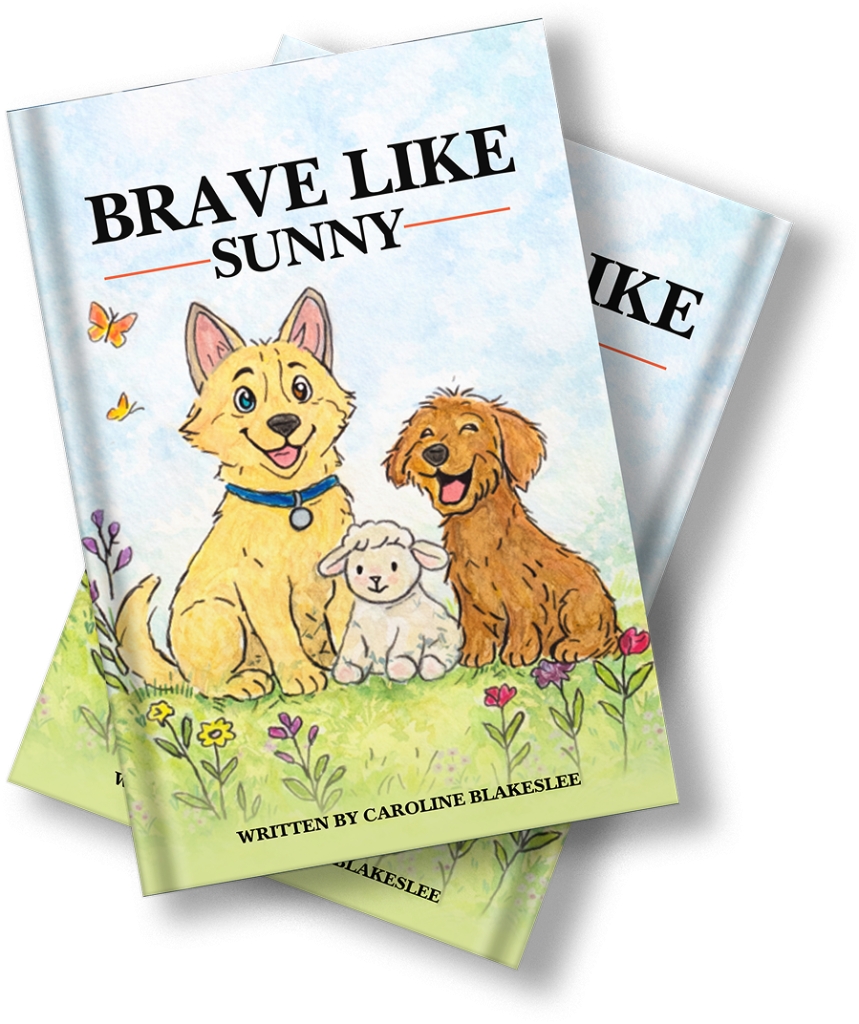
That was the beginning of Brave Like Sunny.
I started writing the book while Milo was going through treatment, but I couldn't finish it. I was too afraid. Writing an ending felt dangerous, almost superstitious, as though putting the story on paper might somehow force reality to choose an outcome before we were ready.
So I stopped.
And life kept happening.
Milo survived. Against overwhelming odds, he survived.
Chemo. Radiation. Surgeries. Blood transfusions. Fear. Uncertainty.
He survived.
And once he was finally cancer free, it felt like I could breathe for the first time in years.
Going Back to Sunny
But then life unraveled again. My uncle Phil, one of the most important people in my life, my protector and hero, became sick with cancer. Then in 2025, my dad died suddenly in a boating accident. Three months later, Uncle Phil died too.
I don't know how to adequately explain what it feels like to lose the people who made the world feel safe.
Everything became untethered.
So I went back to the studio.
Back to paint. Back to paper. Back to Sunny.
I reopened the manuscript almost by accident, and suddenly it all made sense. The story wasn't just about illness anymore. It was about resilience. About uncertainty. About learning how to keep softness and imagination intact while living through hard things.
My aunt Nonie read the manuscript and told me I had to illustrate it.
So I did.
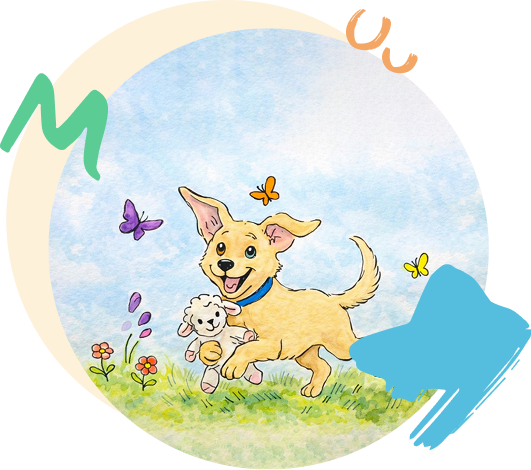
And somewhere between the watercolor washes and the tiny paw prints and the bubbles and the crooked little expressions on Sunny's face, I started finding parts of myself again too.
What Brave Like Sunny Really Is
That's what this book really is.
It's grief transformed into gentleness.
It's fear transformed into warmth.
It's the part of me that still believes tenderness matters, even after everything.
Brave Like Sunny was written for children, but truthfully, I think it was also written for anyone who has ever felt scared, anxious, overwhelmed, uncertain, lonely, or emotionally exhausted by life.
It's for people learning how to be brave without becoming hardened.
Because I don't actually think bravery means being fearless.
I think bravery is continuing to love the world after it hurts you.
I think bravery is choosing softness anyway.
I think bravery is what Milo did.
And maybe, in a different way, it's what I've been trying to do too.
Sometimes I think it's strange that my life somehow circled back to helping children emotionally through art after all. I once thought I was meant to do that inside a classroom. Instead, I found myself here creating stories and illustrations that help children process fear, uncertainty, grief, and hope through imagination.
Maybe this was always the path.
Messier than expected, certainly.
More emotionally expensive than I would have preferred.
But maybe this was always where I was meant to end up.
And if Brave Like Sunny helps even one child or one adult feel a little less alone in whatever hard thing they're facing, then every difficult chapter somehow becomes part of something meaningful.
Which feels, in its own strange way, a little like healing.